
How to Improve Self-Awareness: What No One Tells You About the Work
Some people notice they are overwhelmed only after they have snapped at a partner, shut down in a meeting, or gone numb for days. That is often where the question of how to improve self-awareness becomes real — not as a vague self-help goal, but as an urgent need to understand what is happening inside before it continues spilling into relationships, decisions, and health.
Self-awareness is not about judging yourself more accurately. It is about relating to yourself more honestly. And that distinction matters more than most people realize.
What Self-Awareness Actually Is
Self-awareness is the ability to notice your internal experience and connect it to your behavior — your emotions, body signals, thoughts, assumptions, needs, and habitual patterns. It also includes how others experience you, which is where self-awareness stops being private and starts becoming relational.
Most people think self-awareness means having insight into their past, knowing their triggers, or being able to name their personality type. Those things can help. But real self-awareness is active and present-tense. It shows up in the moment when you recognize, I am feeling dismissed right now, and that is why my tone just changed. It matters when a parent notices, My child is not the only one dysregulated in this room. It shapes outcomes when a clinician catches a personal reaction in session and chooses to ground before responding.
Insight is the beginning. Applied insight is the actual work.
The Problem With Self-Awareness Becoming Self-Criticism
This is where many people stall. They start paying attention to themselves and quickly turn that attention into a prosecution. Every reaction becomes evidence of failure. Every emotion becomes a problem to eliminate.
Self-awareness grows in an atmosphere of honest curiosity, not judgment. If your inner world does not feel safe to observe, you will keep avoiding the parts of it that matter most.
A more useful question is not What is wrong with me? but What is this reaction trying to protect?
That shift is not just semantic. It changes the entire posture of the work. And it points toward something important: many of our strongest reactions are not expressions — they are protections. Defensiveness can shield shame. Perfectionism can guard against the fear of rejection. Withdrawal can protect against vulnerability. People-pleasing can be a strategy for avoiding conflict or abandonment.
This does not mean protective patterns are failures. In many cases, they began as intelligent responses to real conditions. The more honest question is whether they still serve you — or whether they are now running on autopilot at the expense of the life you are trying to build.
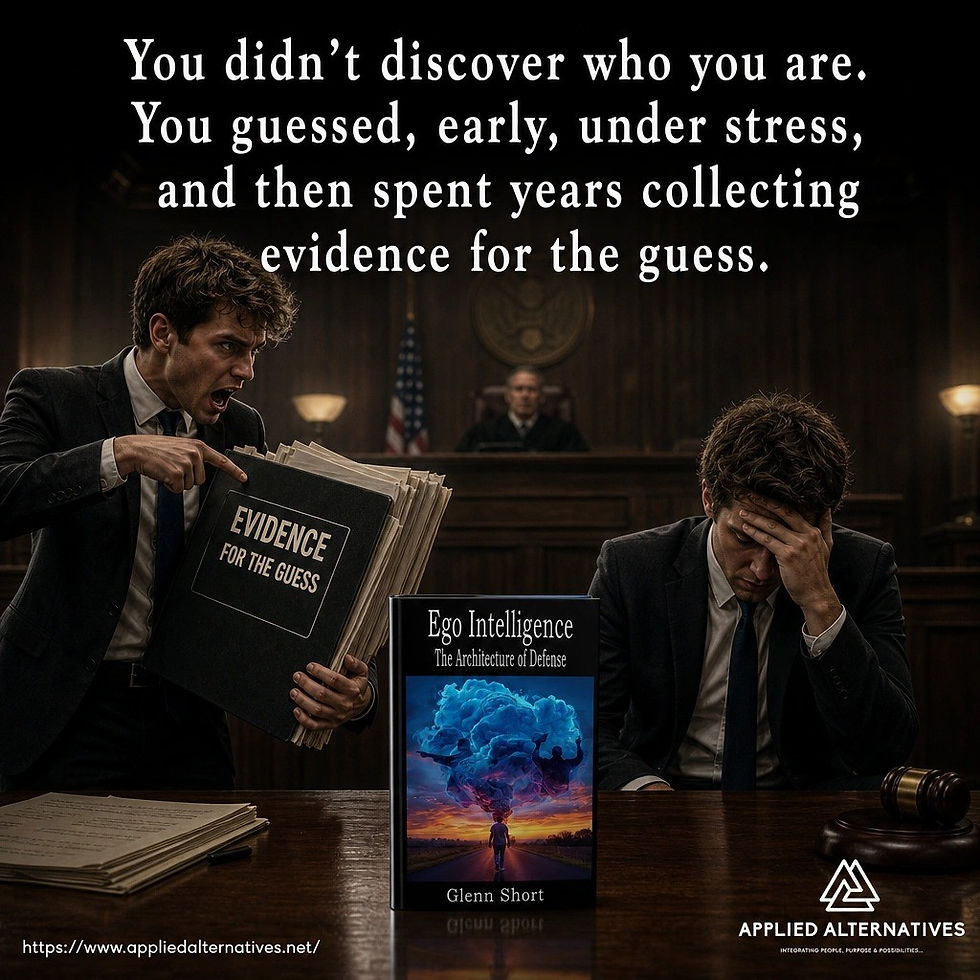
This is the territory Ego Intelligence was written to map. Beneath the behaviors we label as problems, there is almost always a pattern with its own internal logic — a pattern organized around protection, worth, and the fear of threat. Understanding that structure does not excuse the behavior. But it makes change possible in a way that self-criticism never does.
Start With the Body, Not the Story
When people are disconnected from themselves, they tend to live in explanation. They can tell you exactly who is at fault, what happened, and why it all makes sense. But they cannot tell you what they are feeling in their body right now.
The body usually knows before the mind does. Tight shoulders, shallow breathing, jaw tension, fatigue, stomach discomfort, restlessness, and numbness are not random — they are early signals. If you want to build self-awareness in a practical, sustainable way, start by checking in with physical sensation several times a day.
Simple questions: What am I feeling in my body right now? Is my energy open or contracted? Am I bracing for something?
This is not dramatic work. But it is foundational. When you can recognize physical cues early, you are far less likely to be blindsided by your own emotional reactions later.
Name What You Are Feeling With More Precision
Most adults were taught to sort emotional experience into broad categories — fine, stressed, angry, sad. That limited vocabulary makes it harder to understand what you actually need.
There is a real difference between disappointment and grief, between irritation and resentment, between anxiety and overwhelm. Precision creates clarity. Clarity creates better choices.
When you move quickly past your feelings, you lose information. Pause long enough to name them accurately. What looks like anger may be embarrassment. What feels like laziness may be depletion. What appears as detachment may be self-protection.
This matters especially in helping professions and in family systems, where reactions often carry more than one layer and where the cost of acting from misread emotion is high.
Look for Patterns, Not Just Moments
One difficult day does not define you. Neither does one strong reaction. Self-awareness becomes genuinely useful when you track patterns across time.
What situations consistently leave you feeling small, invisible, or defensive? When do you tend to overextend? What kinds of conversations make you go quiet? Patterns reveal the deeper structure beneath behavior — the beliefs, the fears, and the value configurations that are shaping your present choices whether you are aware of them or not.
Journaling supports this, but it does not need to be elaborate. A few lines each day about what you felt, what happened, and how you responded will surface themes faster than you expect.
Build Pauses Into the Day
Awareness rarely develops in constant mental noise. If your day runs from start to finish without interruption, your internal signals will keep getting overridden by urgency.
You do not need an elaborate practice. You need small, repeatable pauses. A minute before opening the laptop. Three breaths before walking back into the house after work. A quiet check-in after a hard conversation.
These pauses interrupt autopilot. They create the space to ask, What am I carrying right now? and How do I want to respond — not just react?
Over time, that space becomes less of a technique and more of a way of operating.
Why This Can Feel Harder Before It Feels Better
As awareness increases, you may notice discomfort, fatigue, or grief more acutely. That is not the process failing. It is the process working — you are finally perceiving what was already present.
For people with trauma histories or chronic stress, this work is best approached gradually and with support. Growth is not measured by how much you can analyze. It is measured by how honestly you can be with yourself and how skillfully you can act from that honesty.
The most lasting change comes from consistency, not intensity. Notice your body. Name your feelings precisely. Track your patterns. Pause before reacting. Then make one slightly more aligned choice.
That is how awareness becomes transformation — not through perfection, but through repetition.


Comments